

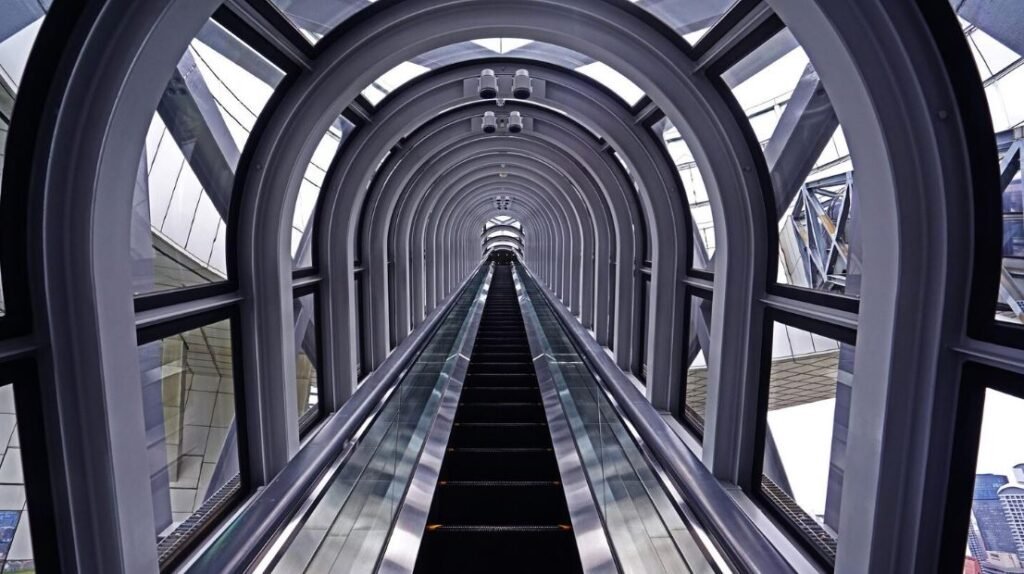
There is a story that seems more like legend than history hidden beneath St. James’s Palace’s polished charm: a secret tunnel that once connected St. James’s Palace and The Stafford London. Long before privacy became a rarity, this secret passageway of luxury and secrecy provided British royalty and a select group of guests with an incredibly discreet escape.
Stafford London has always been unique. Its subtly self-assured grandeur has drawn aristocrats, celebrities, and diplomats since it opened its doors in 1912. However, beneath its Georgian exterior, the hotel conceals one of London’s most fascinating mysteries: a secret passageway that formerly permitted kings to move between the palace and the hotel without being noticed.
| Feature | Description |
|---|---|
| Location | The Stafford London, St. James’s Place, once linked by tunnel to St. James’s Palace |
| Historical Use | A private passageway used discreetly by Queen Elizabeth II and The Queen Mother for lunches and visits |
| Origin | Constructed in the 17th century and later adapted for wartime protection |
| Present Role | Repurposed as a 380-year-old wine cellar hosting elite tastings and private dinners |
| Famous Visitors | Queen Elizabeth II, Prince William, Zara Tindall, David Beckham, Ronald Reagan, Bing Crosby |
| Wartime Purpose | Served as an air raid shelter for American and Canadian officers during World War II |
| Reference | The Stafford London – Official Site |
It was said that the late Queen Elizabeth II, sometimes accompanied by her mother, The Queen Mother, who had a legendary penchant for private parties, used the tunnel for discreet lunches. The dim passageways of the tunnel came to represent quiet privilege, a place where the palace’s formality could be relaxed. Even though the passage is now sealed, the hotel’s foundations bear witness to its remarkable legacy.
That same tunnel has been revitalized into one of London’s most evocative wine cellars. Over 8,000 bottles from all over the world are kept in the room, which is lined with aged oak and rough stone. These days, elite events, private tastings, and intimate dinners take place in the cellar. Drinking rare Bordeaux under the same arches that once protected royalty from the public eye is described by guests as a surreal experience.
The tunnel had a completely different function prior to its metamorphosis. It was transformed into an air raid shelter for American and Canadian officers stationed in the city during World War II. The Stafford served as a club for allied officers at the time, providing a haven from the mayhem above. Numerous personal belongings, including letters, helmets, and photos, still adorn the cellar walls, narrating tales of bravery and friendship. The room is especially eerie yet exquisitely alive due to the fusion of royal elegance and wartime grimness.
A well-curated tapestry of luxury and legacy can be found in the Stafford family’s history. It has played host to cultural leaders, movie stars, and politicians over the years. Ronald Reagan stayed here prior to becoming president because he valued its discretion over more ostentatious options. Known for turning the courtyard into a makeshift golf course with ashtrays for holes, Bing Crosby was a frequent visitor. The tradition is still carried on by contemporary royalty; Prince William has been seen here having discreet lunches with David Beckham at the American Bar.
A story inside a story is the American Bar itself. One of just two original “American Bars” still standing in the capital, it is decorated with souvenirs left by famous visitors and tourists from around the world. The room has a nostalgic yet contemporary vibe thanks to the delightfully eclectic décor, which includes aviator caps, celebrity pictures, and gifts from dignitaries. Long after the last cocktail has been poured, it is easy to imagine discussions between monarchs, actors, and artists.
There was a surge of interest—and annoyance—when news broke recently that the tunnel existed. According to reports, royal courtiers were “livid,” viewing its revelation as an unwarranted violation of custom. The public’s curiosity, however, was unavoidable. From rumors of secret passageways connecting Westminster’s magnificent buildings to the existence of tunnels beneath Buckingham Palace, London has long been a city steeped in secrets. But perhaps the most romantic of them all is the Stafford’s tunnel, where history, hospitality, and humanity once coexisted.
The way the hotel’s past still permeates the present is what makes this story so amazing. The dual identity of The Stafford—luxury and legacy, privacy and prestige—seems to be present everywhere. As visitors move through its corridors, they might sense something deeper than luxury. It’s the subdued comfort of knowing that they belong to a lineage of stories, one that encompasses kings, officers, and artists who all sought solace within its walls.
The staff at Stafford’s takes great satisfaction in maintaining this feeling of continuity. They describe the hotel as a living thing that is always changing without ever losing its identity, rather than as a monument. The tunnel’s transformation into a wine cellar served symbolic as well as utilitarian purposes. It transformed a journey of concealment into one of connection, turning secrecy into celebration. It did this by redefining history as something to be enjoyed rather than merely remembered.
The subtlety of these spaces is what makes them so appealing. They tell the tale of openness—of shared experiences beneath the surface—despite being incredibly private, almost sacred. The Stafford’s tunnel serves as a reminder that grace can occasionally be heard whispering beneath our feet rather than shouting out loud.
Few luxury hotels are as adept at striking a balance between tradition and modernity as The Stafford. In a time when so much of the hospitality industry prioritizes novelty over depth, its capacity to change while maintaining authenticity feels especially inventive. Visitors become part of a chain of unspoken secrets, silent gestures, and long-standing customs rather than merely checking in.
In its mystique, even the city itself appears to be working together. The old tunnel’s silence persists beneath the busy streets above, which are teeming with tourists, traffic, and conversation. Memory is stored in the stones. In its converted cellar, the sound of guests raising glasses is now mixed with the faint echoes of royal footsteps.
There are few locations that more perfectly capture London’s dual character—its grandeur and intimacy—than The Stafford London. Even though the tunnel that connects it to St. James’s Palace is sealed, its history ties the past and present together. Its quiet dignity seems more and more uncommon in a time of exposure. And maybe that’s why its legend lives on: beneath all the extravagance, there’s still something very human: a yearning for seclusion, a sense of community, and the elegance of a secret preserved long enough to endure.
