

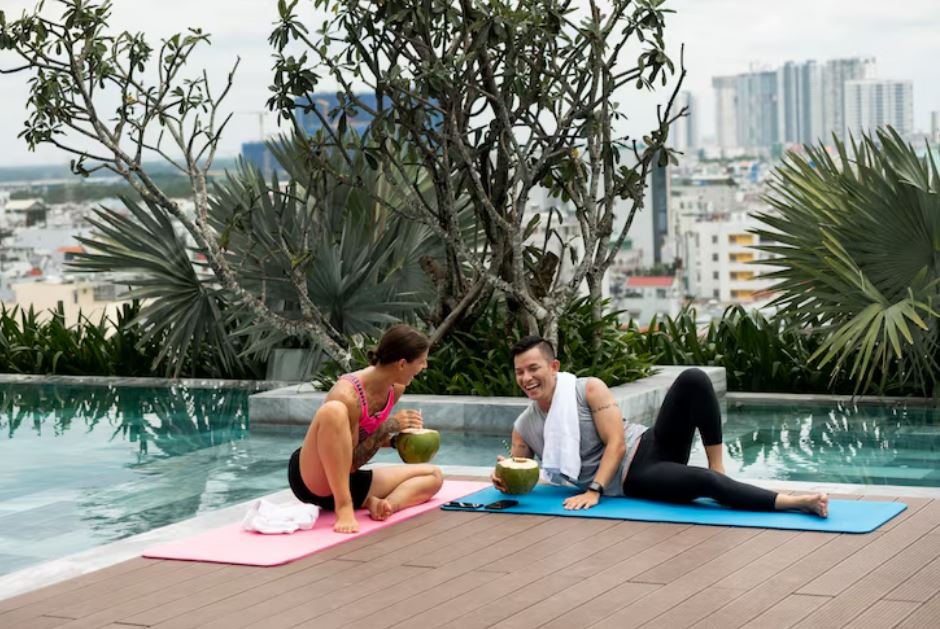
Inconspicuously, rooftop spas are transforming the concept of luxury. They provide a sense of peace that is both necessary and luxurious, perched above the bustle of the city. The idea of luxury changes in these upscale hideaways—from excess to experience. Today, hotel brands, developers, and designers compete to create mental and sensory-calming havens.
The rooftop spa at the Mandarin Oriental Residences on Fifth Avenue has established itself as a standard for urban tranquility. As they float in hydrotherapy pools and look out over Central Park, their reflections blend in with the skyline of Manhattan. It serves as a visual representation of what contemporary luxury has evolved into: a focus on literal and emotional elevation rather than ownership. Celebrities have also taken notice, as evidenced by the dominance of their skyline saunas and rooftop yoga sessions in lifestyle magazines and digital feeds.
| Feature | Description |
|---|---|
| Concept | Rooftop spas blend wellness, architecture, and exclusivity, creating a serene escape above urban skylines. |
| Appeal | They attract residents and travelers seeking calm, privacy, and panoramic views amid the city’s rhythm. |
| Industry Impact | Hotels, architects, and developers increasingly use rooftop spas as symbols of prestige and innovation. |
| Market Value | Properties with rooftop spas command premium rates and significantly enhance real estate value. |
| Cultural Influence | Celebrities and influencers have amplified their allure through social media, making them modern lifestyle icons. |
| Sustainability | Many rooftop spas integrate eco-friendly materials, solar heating, and green roofs for responsible luxury. |
| Reference | The Berkeley Palm Beach – How Rooftop Amenities Are Redefining Luxury Living |
The psychological escape that people used to find in coastal retreats is remarkably similar to this growing preference for height and harmony. Without having to leave the city, rooftop spas offer the same peace and quiet. They are appealing because of their paradox: they provide silence in the midst of noise and solitude in the midst of density. This is especially helpful for developers. They increase a property’s value and prestige while also making the most of available space by turning unused rooftops into wellness retreats.
This change is being enthusiastically embraced by architects. Skyline spas created by Morris Adjmi Architects and Concrete Amsterdam serve as design statements. The spa deck in projects like Brooklyn’s One Williamsburg Wharf blends European minimalism with New York energy, creating a sanctuary that feels both private and public. Residents refer to the outcome as therapy above the skyline, and it is remarkably effective.
Nowadays, wellness is the cornerstone of urban prosperity rather than a secondary attribute. Wellness-driven spaces are one of the fastest-growing segments of upscale real estate, according to the Global Wellness Institute. Rooftop spas, which represent a move toward mindful luxury, are a perfect example of this movement. This pattern is similar to how celebrities like Bella Hadid and Gwyneth Paltrow promote wellness as a way of life rather than a passing fad. Because of their social influence, self-care has become both fashionable and aspirational.
This movement has been accelerated by hotel brands. Rooftop spas are being incorporated into upscale establishments as signature features, such as The Edition in Tokyo and The Ned in London. These spaces are immersive stories of design, aroma, and sound rather than just places to unwind. Their building silhouettes gleam in the sunset sky, producing a visually striking and intensely intimate image. They are the new cathedrals of peace on social media, constantly being photographed and widely shared.
There is a noticeable financial impact. According to Haven Lifestyles, the value of developments with rooftop wellness centers can increase by as much as 30%. They are used by hospitality organizations as branding tools that represent contemporary sophistication, so their appeal is not just restricted to homeowners. An economic asset has emerged from what was once a forgotten mechanical zone. Developers’ approach to underutilized vertical spaces has significantly improved as a result of this change.
Design evolution is equally important. Utilizing solar technology, recycled materials, and green roofing, the contemporary rooftop spa places a strong emphasis on sustainability. The building itself is alive. This design concept is especially creative because it combines aesthetic appeal with environmental responsibility. That combination is irresistible to the elite who care about the environment. They can unwind guilt-free and indulge without compromising.
Rooftop spas are becoming cultural hubs in places like Dubai and Los Angeles. They provide spaces for private events, art exhibits, and wellness retreats. They are extremely versatile due to their multifunctionality. By day, they are secluded havens, and at night, they are bright social gathering places. They are referred to as “the future of elevated living” by developers like Tribeca in India, illustrating how rooftops have evolved into more than just physical extensions of homes.
This change has been accelerated by celebrity culture. It was more than just luxury when David Beckham was spotted relaxing at The Shard’s expansive pool or when Kim Kardashian held a skincare event on a rooftop spa in Beverly Hills. These instances demonstrate the material and symbolic ascent of self-care. For those who seek luxury today, harmony is equal to height.
This change has been examined as a generational signature by organizations like Istituto Marangoni. Experiences that are both rejuvenating and shareable are highly sought after by Gen Z and millennials. That’s precisely what a rooftop spa offers. Retractable glass domes, aromatherapy areas, and heated infinity edges provide both digital appeal and physical comfort. Rooftop spas are a characteristic of contemporary urban architecture because of their dual function of providing relaxation and facilitating social interaction.
This is referred to as “the rise of vertical wellness” by sociologists. It is a reaction to lives that are constantly demanding and to over-concentration. Modern-day monasteries, rooftop spas are places where headspace is created by height. It has deep symbolic meaning. Clarity has replaced status as the key to rising above the city. Every pool plunge becomes a meditation on balance, and every terrace becomes a metaphor for perspective.
Businesses have begun incorporating these ideas as well. In order to encourage creativity and lower stress levels, Google, Salesforce, and Apple are installing rooftop wellness decks on their campuses. These areas, which have spa-inspired treatments and meditation areas, are very effective at enhancing worker productivity and well-being. They turn workplaces into peaceful, focused ecosystems.
According to this perspective, rooftop spas are cultural markers rather than just opulent extras. They represent society’s shared aspiration for harmony in the face of advancement. In a time characterized by screens and noise, the idea of fleeing upward and toward the open skies strikes a deep chord. A pause button that is suspended between the skyline and the clouds is available at the rooftop spa.
The parallels between this architectural change and a moral one are especially noticeable. These days, luxury is determined by experience and intention rather than by marble and chandeliers. That evolution is embodied by rooftop spas, which are emblems of inclusive and intimate refinement. They represent an incredibly successful form of contemporary comfort by fusing sustainability, artistic expression, and human need.
Cities and their sanctuaries will continue to grow. Lighter, quieter, and higher is how we want to live, and rooftop spas are a permanent manifestation of that.
