

Indulgence has always been a promise of luxury hotels, but the most upscale suites go above and beyond. These are sanctuaries created to blur the line between seclusion and perfection, not just rooms. With amazing accuracy, every inch, every detail, and every moment is choreographed. These suites are designed for individuals who live above the law, such as royalty, businessmen, artists, and those whose names don’t often show up on reservation sheets. They have bulletproof glass walls and personal butlers who are aware of your favorite midnight snack.
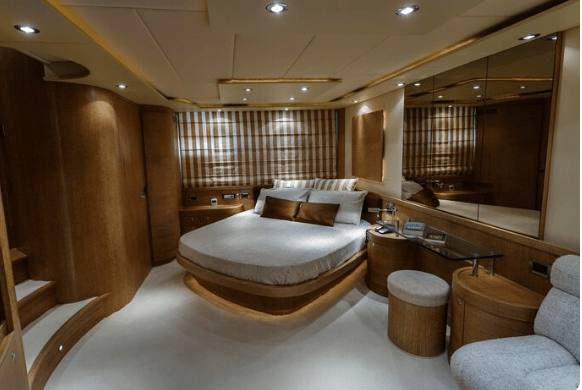
Privacy is guaranteed in these exceptional locations; it is not a privilege. Each apartment functions as a separate universe where visitors can manipulate their environment with a simple finger swipe or voice command. There are no shared hallways, no lobby check-ins, and no disruptions. The goal of a visit is to give visitors the rarest kind of comfort possible: the feeling that they are both unseen and unbeatable.
What Happens Inside the World’s Most Exclusive Hotel Suites
| Category | Details |
|---|---|
| Focus | Exploration of the luxury, privacy, and bespoke experiences offered inside the most exclusive hotel suites globally |
| Concept | Spaces designed to provide complete seclusion, exceptional design, personalized service, and unmatched opulence |
| Distinguishing Features | Private butlers, bulletproof glass, infinity pools, curated art, gourmet chefs, and cutting-edge technology |
| Notable Properties | The Mark Penthouse (NYC), Empathy Suite (Las Vegas), Royal Penthouse (Geneva), Ty Warner Penthouse (NYC), The Muraka (Maldives) |
| Target Guests | Royals, celebrities, diplomats, and ultra-high-net-worth travelers seeking privacy and personalization |
| Reference |
Intimacy and luxury come together in spectacular fashion at The Mark Penthouse in New York City. The most expensive hotel suite in the US, this residence-in-the-sky is over 10,000 square feet and costs $100,000 per night. The 2,500-square-foot terrace, which faces Central Park, may be used as a private ballroom or as a place to eat under the stars. The interior features a double-height grand salon, five bedrooms, and six bathrooms, giving it the size of a mansion and the amenities of a palace. It is frequently used by celebrities as a sanctuary from the turmoil below at the Met Gala. It’s a theatrical yet intimate experience, as though the suite were created for an invisible performance.
What “art hotel” really means is redefined by the Empathy Suite at the Palms Casino Resort in Las Vegas. It blurs the distinction between a penthouse and a gallery, thanks to Damien Hirst’s design. Visitors are surrounded by genuine Hirst artwork, such as glass-suspended preserved sharks and pill cabinets covered in diamonds that transform medication into art. The suite has a private pool that hovers above the Strip, a bar that seats 13, and a personal butler who is available around-the-clock. Everything about this place has a purposefully provocative vibe that captures the audacious spirit of Las Vegas while providing an incredible sense of intimacy.
The Royal Penthouse Suite at Hotel President Wilson in Geneva is the best option for people who appreciate luxury and security equally. The apartment, which takes up the entire eighth level of the hotel and costs $80,000 per night, has twelve bedrooms, twelve marble baths, and expansive views of Mont Blanc and Lake Geneva. For visiting heads of state and international celebrities, bulletproof windows, private elevators, and a panic room provide peace of mind. A private fitness facility and a Steinway piano provide a balance between elegance and tranquility. The setting is tactful but intensely intimate, serving as a reminder that real luxury is frequently subtle rather than ostentatious.
The Ty Warner Penthouse of the Four Seasons New York, located across the city skyline, is a testament to patience and vision in architecture. This $60,000-per-night penthouse, which took seven years to plan and $50 million to build, is located high above Manhattan and features floor-to-ceiling glass walls that provide 360-degree views. Rare textiles, museum-caliber artwork, and hand-carved ceilings envelop visitors. The event is completed with a personal butler service and a chauffeured Rolls-Royce. Every gesture is expected before it is said, making it feel less like a hotel stay and more like living in a painstakingly constructed dream.
Only a select few can visit the Hilltop Villa at Laucala Island in Fiji, an invitation-only retreat for people who seek seclusion away from city skylines. Situated on the highest point of a private island, encircled by the water and jungle, it costs about $55,000 each night. To create the appearance of seclusion, guests have access to personal chefs, drivers, and even a nanny. It’s a really successful retreat for people who want to completely detach. Being totally invisible is the goal of the experience, which is a form of spiritual luxury that goes beyond worldly extravagance.
Then there is the Conrad Maldives’ The Muraka, a suite so remarkable that it is partially submerged. Enclosed by clear acrylic walls that display coral and marine life in captivating clarity, the master bedroom is located beneath the Indian Ocean. It’s a place where the normal rules of travel don’t apply, and it costs $50,000 per night. With a private chef and butler on hand, visitors may enjoy jet skis, a sundeck, and an infinity pool upstairs. The experience is futuristic yet surprisingly personal, and it’s especially creative in the way it combines emotion and architecture, enabling visitors to sleep inside a living habitat.
A more traditional interpretation of grandeur can be seen in Rome at the Hotel Excelsior’s Villa La Cupola. Its marble columns, frescoed ceilings, and cupola that opens to reveal vistas of the Eternal City are all examples of old Roman architecture. Below, a mosaic-lined jacuzzi, spa, and private movie theater form an enduring rhythm of luxury. In a scenario so theatrical it almost seems unreal, champagne is served on the balcony while the city below lights.
These suites are similar in terms of orchestration as well as elegance. Every moment is purposefully gracefully created. The staff anticipates demands with almost clairvoyant precision, the lighting varies softly throughout the day, and the room’s smell adapts to the weather and mood. Privacy is not improvised; it is engineered. From the airport, guests are driven by private vehicles or helicopters, led via secret doors, and attended to by staff members who work like a symphony—perfectly orchestrated, seldom noticed.
According to reports, celebrities including Taylor Swift, Leonardo DiCaprio, and Beyoncé have stayed in these upscale retreats. However, the appeal is freedom rather than celebrity. The prospect of remaining somewhere totally apart from everyday life. Time seems to slow down and indulgence nearly becomes meditative within these walls.
These suites are philosophical declarations rather than just somewhere to sleep. They are a reflection of the growing trend in luxury hospitality toward highly customized experiences that meet psychological and emotional demands rather than excess for the sake of excess. Today’s guests seek purpose in addition to luxury. They desire to be understood without having to ask.
It is an intriguing conundrum. Despite being chosen for invisibility, these areas are intended for visibility. They provide sanctuary while celebrating magnificence. Within them, the outside world vanishes, to be replaced by a world of controlled serenity.
